




What Clinical Trials Teach Us About AI Implementation
Blog
November 4, 2026

When it comes to AI in clinical development, much of the attention has understandably focused on efficiency. If technology can write code, assist with data review, identify patterns, or prepare information for analysis, clinical data teams can spend less time on manual work and potentially support more studies.
But some of the work we are looking to automate is also how clinical data professionals develop expertise. Reviewing imperfect data, working through submissions, and resolving unexpected study issues give people the experience to recognize when something is wrong—the same judgment they will need to evaluate AI output and remain accountable for the decisions that follow.
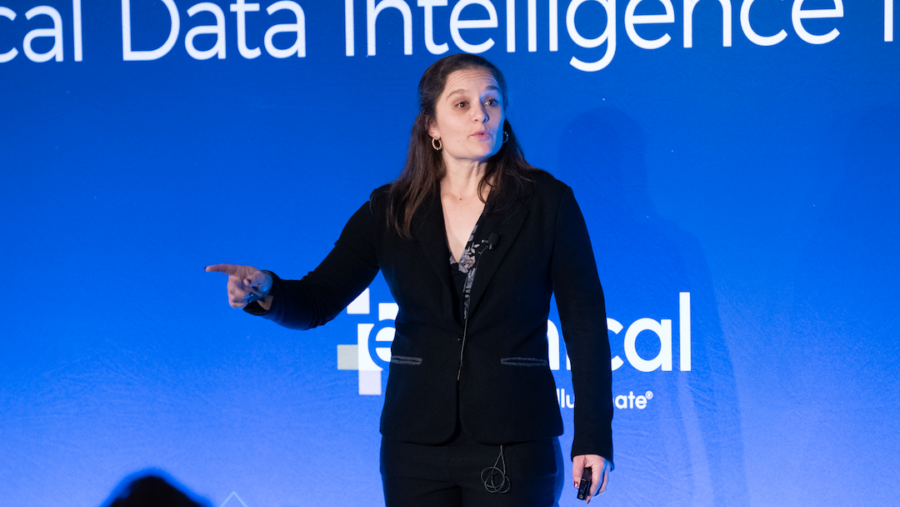
We explored that issue during our ENGAGE 2026 panel, How Work Happens Now: Rethinking Clinical Data Processes and Expertise in the Age of AI. I was joined by Sarah Clark, Global Head of Data Management at AstraZeneca; Renu Shukla, Director of Clinical and Statistical Programming at Johnson & Johnson Innovative Medicine; and Mike Underhill, Head of Clinical Data Enablement at Astellas Pharma.
What became clear during our discussion was that preparing organizations to responsibly leverage AI involves a great deal more than selecting and training teams on how to use new technology.
Is this disruption of AI really any different than anything else that we’ve had in the industry?
According to Renu, the answer was unequivocally yes. For programming teams in particular, as AI becomes capable of producing more code, the programmer’s role will move toward domain expertise: understanding regulatory expectations, interpreting data, identifying issues, and helping clinical stakeholders determine how the data should be reported.
The panel also challenged the assumption that greater automation will necessarily mean less work. Sarah expects organizations to be able to do more with the same resources. Renu expects a more robust pipeline to create additional work, while Mike sees the change primarily as an evolution in what people do: “What the roles look like are going to be different. We have to accept that they’re going to be different and we have to start preparing for that.”
We all came to be the SMEs we are today by doing the work that we’re now going to get AI to do. So how do we grow those SMEs of the future?
This may be one of the more difficult consequences of AI in clinical development, but our panelists had a few answers to this question.
Renu suggested simulation as one possibility: giving people synthesized clinical trial data and allowing them to experience trial and submission scenarios, make decisions, and understanding the outcomes.
Mike pointed to the value of immersive, cross-functional training. Earlier in his career, employees across IT, data management, clinical operations and statistics learned clinical development together. With AI changing traditional routes to expertise, he suggested the industry may need to revisit that type of structured development.
Keeping a human involved is frequently presented as the answer to responsible AI adoption. But human involvement does not automatically mean meaningful oversight. I was curious, in particular, about approval fatigue.
If an SME repeatedly reviews accurate AI output, will that person eventually stop evaluating it and simply approve it?
The answer from our panelists: hopefully not. Organizations need to determine where human judgment is necessary and what meaningful review should entail. Mike suggested applying risk-based thinking to AI oversight. Some AI-supported activities may not need approval; others absolutely will. Renu emphasized the same underlying principle: humans remain accountable for what organizations ultimately deliver.
As AI capabilities become more accessible, another risk is adopting them simply because they are available. How do we ensure that we’re using AI in the right places?
According to Mike, organizations need to begin with the problem they are trying to solve and then determine whether AI should be part of the solution.
Sarah offered a practical example. Her organization considered using AI to produce data review and medical oversight plans, then ultimately chose not to. “The cost for implementing that [technology] against the two or three days that it takes us now to write a templated data review plan was really not worth it.”
What I took away from this discussion is that to responsibly adopt AI, we need to think about AI adoption and workforce development together. How will roles change, how will expertise be developed, where does human oversight remain necessary? We cannot just decide which work to automate and only afterward ask what role people should play. As Mike noted during our discussion, the starting point should remain what we are trying to achieve and whether AI actually helps us get there.
To discover how eClinical Solutions is applying AI to clinical data challenges while keeping human expertise and oversight at the center, explore the AI agents available within the elluminate® Clinical Data Intelligence Platform.

Georgina (Gina) Wood is a senior director with 30+ years of global pharmaceutical experience in areas of Animal & Human Health in UK & US at various companies, including big pharma (Novartis, Pfizer & Celgene/BMS) as well as CRO and Technology companies. She is an experienced global and technical team leader with an excellent customer service ethic and proven software development, project management, and communication skills. Gina brings proven aptitude in the development of process and technical systems, training and definition of clinical data standards from collection to submission, and an in-depth understanding of the product life cycle from research to marketing. Specific areas of expertise include RBQM, MDR, and SCE.