






The Takeaway From CDMI: Clinical Data Teams Are Getting More Practical About AI
Blog
October 7, 2026

This October more than 200 attendees representing over 80 life sciences companies came together at ENGAGE 2026 in Philadelphia to talk about clinical data intelligence in action. Over two days, my team and I heard from technology leaders, clinical data experts, and life sciences organizations about how they are leveraging elluminate today and what they are preparing to do next.
One of my favorite moments of ENGAGE 2026, however, had nothing to do with clinical data. I got a few minutes with our keynote speaker, Dr. Elin Haf Davies, and we found out quickly that I’m a farmer’s son and she’s a farmer’s daughter. We talked about what a farm teaches you: discipline, patience, hard work and, above everything else, getting things done no matter what. Clinical trials are full of that same kind of hard work—work that matters and has to get done well. Throughout ENGAGE, many of the conversations were focused on that work and how we can make sure our efforts are being put to their best use, whether it’s through better collaboration, more strategic partnerships, or the right technology.
As we heard from clients like Merck, argenx, Parexel, Jazz Pharmaceuticals, Dyne Therapeutics, and Karyopharm Therapeutics, and from partners including ZS and PwC, here is what stayed with me.
I was the executive sponsor for Merck’s move to elluminate for medical monitoring, so I’m biased, but hearing John Hirschman and Lauren Katzenstein describe how their teams work differently now because of elluminate was a highlight of the week for me. Merck’s presentation illustrated the value of a collaborative implementation approach, detailing how eClinical’s implementation consultant partnered with Merck’s product champion to successfully manage change and transform the medical monitoring process.
Alex Crawford from Jazz Pharmaceuticals offered a similar lesson from Jazz’s RBQM journey: Having the right people in place early is critical to program success. Similarly, Sean McNiff from Dyne Therapeutics, discussed the value of developing internal champions who can connect technical and clinical teams.
Stijn Rogiers and Jasmine Kestemont from argenx walked through how they replaced separate review plans for each function with one Integrated Data Review Plan (IDRP). They detailed argenx’s journey toward an IDRP and how they accomplished it by bringing together functions including data management, clinical development, biostatistics, and global patient safety.
Our Biometrics Services leaders, Katrina Rice, Grant Williamson, Diane Lacroix, and Demi Niforos discussed how their collaborative approach during database set up and review planning enabled fewer setbacks and faster delivery.
Nathan Johnson, our Chief Product Officer, summed up the current AI tension well: machines scale, detection scales, but expert attention doesn’t. The example: A medical monitor goes to work on Monday morning and is greeted with an enormous amount of data to review. AI can help with issue detection, but if AI finds ten times more issues and drops them into a bigger queue for the medical monitor to review, we haven’t really solved anything. He detailed how AI agents in elluminate can go beyond issue detection, helping investigate, contextualize, and prioritize issues so experts can focus their attention where it matters most.
The “How Work Happens Now” panel session on AI came at it from the practitioner side. Too much clinical data work is still manual and siloed—which is where the delays and quality problems come from. AI can take on much of the clinical data work that is still manual, meanwhile scientific and operational decisions stay with the people who have the judgment to make them.
Everyone wants productivity, but nobody wants to give up accountability for it. Raj Indupuri’s keynote, “Decisions You Can Trust,” set up this idea, and customer presentations kept coming back to it. Around the topic of AI agents, the conversation revolved around validation, regulatory expectations, traceability, and where a person needs to enter the equation to sign off.
This discussion brought up a rule that I, in my work with agentic AI, keep coming back to: The agent proposes, the human disposes. The agent drafts and recommends. A person reviews, decides, and owns the outcome. Nothing consequential happens without that approval, and every step is logged in a way a regulator would recognize.
In their presentation, Kenneth Lima and Swatin Shetty from Parexel discussed the importance of a technology partner capable of working across the many data sources their customers bring to clinical trials. Lauren and John from Merck talked about collaboration, transparency, and finding a partner that could grow with its needs. Sean from Dyne reflected on the value of the feedback loop that comes from being an early adopter.
Taken together, those conversations suggested that implementing new technology is rarely a simple vendor transaction. As clinical data strategies evolve, organizations need partners willing to evolve alongside them.
I leave ENGAGE 2026 with a clear picture of what our stakeholders, inside and outside the company, need from us, and it will shape my plans for 2027 and beyond. Thank you to every client and partner who presented, asked hard questions, and participated in conversations.
Session recordings will be available in the next couple of weeks. If you weren’t able to attend ENGAGE with us, make sure you take a look.
Click here learn more about the elluminate Clinical Data Intelligence Platform and how it leverages AI to accelerate clinical development.
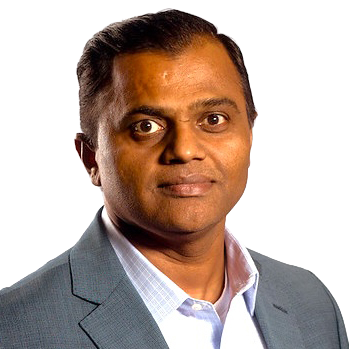
As Chief Transformation and AI Officer at eClinical Solutions, Venu Mallarapu defines and leads the company’s enterprise AI strategy in partnership with the CEO, with board-level oversight, translating vision into execution across the organization and its client base. Since 2025, Venu has spearheaded eClinical’s Enterprise AI initiative, establishing the governance framework, value measurement framework, and technology strategy driving toward a 20% enterprise-wide productivity improvement. Working with partners including OpenAI, Anthropic, AWS, Databricks, and Snowflake he is helping embed intelligent capabilities across the elluminate Clinical Data Intelligence Platform® and eClinical’s global delivery model.